Error message
User error: "arg_0" is an invalid render array key in Drupal\Core\Render\Element::children() (line 97 of core/lib/Drupal/Core/Render/Element.php).All Features

Harish Jose
As readers of my columns know, I am an ardent student of the Toyota Production System (TPS). One of the core philosophies of TPS is kaizen, often translated from Japanese as “continuous improvement.” It is the idea that one should continuously find ways to eliminate nonvalue-adding activities, and…

Ken Voytek
I find that every so often it is good to step back and think about the current state of manufacturing in the broadest sense. We all see bits and pieces as part of our daily work with manufacturers across the country and from reading the news, but sometimes it can be difficult to fit those puzzle…

Randall Goodden
The manufacturing industry, stock market, and new product development have really taken off in the past four years, and there’s a lot of focus now on moving offshore manufacturing back into the United States. With all of this growth, it is also apparent that many manufacturing corporations are…

Matthew Hora
When her college started requiring students to complete an internship in order to graduate, it created a serious dilemma for Janelle.
“I wouldn’t be able to do classes, do the internship, and work to make money—which is kind of important because I’m basically just paying for school as I can,”…

NIST
Artificial intelligence (AI) promises to grow the economy and improve our lives, but along with these benefits, it also brings new risks that society is grappling with. How can we be sure this new technology is not just innovative and helpful, but also trustworthy, unbiased, and resilient in the…
Paavo Käkelä
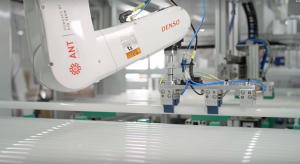
After two decades of offshore productions in low-cost countries, manufacturers are now struggling with the rapidly growing salaries and countereffects of cheap production. The question that industries are asking today is: Do we continue offshoring, or should we consider reshoring?
The right answer…

Jon Speer
Believe it or not, paper is very expensive. Although the going rate for a ream of standard copy paper is only about 10 bucks, the expense of relying on paper for your medical device quality management system is downright outrageous.
Some medical device manufacturers have recognized how expensive…

Anne Trafton
After a patient has a heart attack or stroke, doctors often use risk models to help guide their treatment. These models can calculate a patient’s risk of dying based on factors such as the patient’s age, symptoms, and other characteristics.
While these models are useful in most cases, they do not…

Tom Taormina
In part one of this series, I said that I want to help my colleagues use their ISO 9001 implementation as a profit center and to turn risk-based thinking into risk avoidance. To do this I will share a set of tools that help evolve quality management into business management.
These tools include…

Phanish Puranam
Machine learning, the latest incarnation of artificial intelligence (AI), works by detecting complex patterns in past data and using them to predict future data. Since almost all business decisions ultimately rely on predictions (about profits, employee performance, costs, regulation, etc.), it…

Kelvin Lee
Biopharmaceutical manufacturing uses living cells to produce therapies that treat diseases like cancer, diabetes, and autoimmune disorders. Manufacturing medicine using biology presents different challenges from the traditional chemical manufacturing processes that stamp out identical pressed pills…

Jim Benson
‘It’s the shoes!” Spike Lee yelled into the camera on the Air Jordan ads.
But it was never the shoes. Michael, Magic, and LeBron would have outplayed their leagues in golf cleats.
It was never the shoes.
But it was us, the salespeople. In our case, the intelligencia that “trains” people to be…

Gwendolyn Galsworth
Two of my articles (the first regarding standards, standardization, and standard work; and the second on visual standards) drew a lot of response. Readers were kind enough to share their thoughts and definitions. Some offered new terms to include in the mix: standardized work and visual standard…

Dirk Dusharme @ Quality Digest
Government bureaucracies are inefficient. They waste taxpayer dollars, and they have no incentive to improve. We’ve all heard and probably repeated these axioms about wasteful government spending.
And it’s often true; you don’t have to look far to find examples of government overpaying for products…

Ryan E. Day
Lean: an employee-championed method of waste reduction. Six Sigma: a robust method of defect reduction. Embracing both methods provides organizations with multiple tools for continuous improvement. Developed for manufacturing, lean Six Sigma has now been recognized by government agencies as a…

Taran March @ Quality Digest
At the University of California at San Diego, lean concepts have taken hold. Along with its process improvement curriculum, the university applies what it teaches through initiatives around campus. Projects both complex and simple tackle the snags, waste, and bottlenecks of academic life. Students…

Ryan E. Day
Lean looks at ways to reduce waste and improve flow. The principles are relevant to virtually every organizational sector and vertical. It’s no surprise, then, that so many organizations tout lean and devote resources to lean initiatives. But, too often, there is a tendency for a company to promote…

Jody Muelaner
Understanding the causes of faults and defects, and then improving the system or process so it won’t happen again, is central to lean manufacturing. This article looks at some of the methods used to identify the root causes of issues so that you can prevent downtime and move toward zero-defect…
Takeshi Yoshida
‘Lean” is such a convenient term; everyone uses it based on their own definition. People frequently use “lean” in place of “efficiency,” probably because it sounds more cool. Another round of cost cutting? Sure, let’s tell everyone we’re “going lean,” again.
Lean is a proven, powerful productivity…

Tom Taormina
In 1989, I was handed a copy of ISO 9001:1987 by my employer with the direction to find out what it was all about. Our company was headquartered in Europe, and we would be compelled to implement the standard straightaway.
My first reaction was that I wished it had been published 20 years earlier…

Calin Moldovean
As today’s industries and operations become increasingly more global, an effective management system is rapidly becoming an essential part of a sustainable business strategy. A management system defines how work is done, the desired results, and the controls imposed to ensure those outcomes.
Your…

Gleb Tsipursky
In the context of our increasingly disrupted, globalizing, and multicultural world, quality leaders greatly appreciate the security and comfort of clear-cut strategic plans for the future. After all, following our in-the-moment intuitions frequently leads to business disasters, and strategic plans…

Harish Jose
In today’s column, I’m looking at Weber’s Law. It’s named after Ernst Heinrich Weber (born June 24, 1795, died Jan. 26, 1878), a German physician who was one of the pioneers of experimental psychology. I highly recommend the Numberphile YouTube video that explains this in detail.
A simple…

William A. Levinson
The Automotive Industry Action Group’s (AIAG’s) and German Association of the Automotive Industry’s (VDA’s) new Failure Mode and Effects Analysis Handbook (AIAG, 2019) offers significant advances over FMEA as practiced 15 or 20 years ago.1 The publication is definitely worth buying because the new…

Bruce Hamilton
This year marks the 35th anniversary of a remarkable and unfortunately also singular event in my career: In 1985, my employer, United Electric Controls (UE), elected to remove time clocks from the factory.
At the time of this unusual decision, I had already been employed at UE for 14 years in a…