Error message
User error: "arg_0" is an invalid render array key in Drupal\Core\Render\Element::children() (line 97 of core/lib/Drupal/Core/Render/Element.php).All Features

Saurabh Joshi Shripad
Before the ICH Harmonized Tripartite Guideline Q9—“Quality risk management”—was introduced in 2005, the pharmaceutical industry was evolving but lacked a structured, scientific, and systematic approach. Various stakeholders, including the industry, regulators, and patient rights groups, recognized…

Laura Velásquez Herrera
With its roots in compassion and humanity, the healthcare sector might seem an unlikely place for artificial intelligence (AI) to play a big role. Yet as we look deeper into the complex processes that build our medical systems, we uncover a multitude of ways that AI could revolutionize patient care…

James Chan
The U.S. Food and Drug Administration (FDA) is the country’s chief agency for regulating the manufacture, marketing, and distribution of critical consumer goods including food, cosmetics, medical devices, biological products, and pharmaceuticals. The FDA provides direct oversight of the businesses…

Jennifer King
Many people don’t realize just how long AI has been around in the healthcare industry—and are surprised to find out that it’s something that’s been relied on for 50 years already.
MYCIN, a computer-based model with machine learning capabilities, was developed by a team of researchers at Stanford…

Robyn Coward, Brian Brooks
This year, the Medical Device Innovation Consortium held an Excellence in Quality Summit where it was promised that participants would receive a “unique opportunity to learn adoptable cutting-edge practices to maximize the impact of investing in quality across [their] total product life cycle.”…
Del Williams
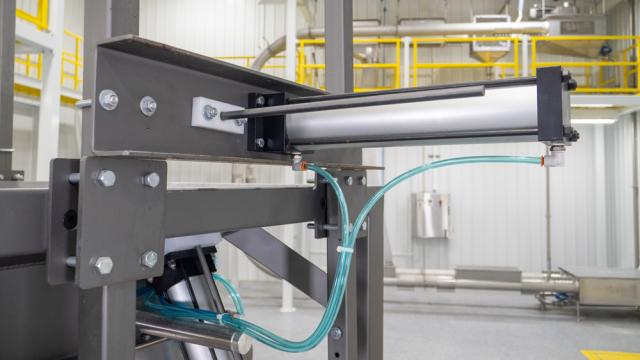
In food processing, bulk-bag discharge systems are used to transfer food ingredients such as flour, sugar, and spices from bulk bags to mixing and blending equipment. However, when not designed or installed properly, bulk discharge systems can become a production bottleneck.
Complicating the issue…

Etienne Nichols
On Jan. 31, 2024, the U.S. Food and Drug Administration (FDA) released its final rule for the new Quality Management System Regulation (QMSR).
The new QMSR is the result of aligning the current good manufacturing practice (cGMP) requirements of the FDA’s quality system regulation (QSR) with the…

Stephanie Ojeda
There’s no question about it: Should an auditor or inspector visit your facility, one thing that will certainly be under the microscope is your corrective and preventive action (CAPA) system.
CAPA management is a recurring theme in U.S. Food and Drug Administration (FDA) warning letters, a fact…

Chris Rush
Ensuring the accuracy and security of clinical data, as well as compliance with good clinical practice (GCP), will in large part determine the success of your study and regulatory submission to the U.S. Food and Drug Administration (FDA). Data management and reporting are essential practices when…

Mike King
Historically, the sensitive nature of personal and company proprietary information held in life sciences quality management systems (QMS) has been a factor for quality management teams’ reluctance to adopt AI. Add to that the complex global regulatory environment and the penalties of noncompliance…

ISO
When a patient comes into a clinic or hospital, healthcare practitioners have all the tools at their disposal to conduct thorough examinations. However, when they see a patient online, they may lack the necessary equipment to conduct the visit properly. One reason for this is that virtual care…

Gleb Tsipursky
Many employees are unaware that they can leverage the Americans with Disabilities Act (ADA) to request work-from-home (WFH) accommodations based on mental health conditions. This knowledge gap has the potential to reshape the “return to office” (RTO) landscape, creating both opportunities and…
Lawrence Goodman
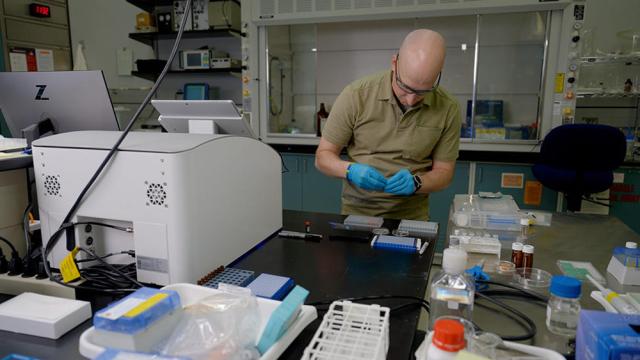
Here are just a few potential advantages of 3D drug printing—a new system for manufacturing drugs and treatments onsite at pharmacies, healthcare facilities, and other remote locations: chocolate-flavored pills for children who hate taking medicine; several drugs combined into one daily pill for…

Etienne Nichols
If you’re a medtech professional who’s been working with the quality system regulation (QSR) in the United States, then you’re probably familiar with the three terms the U.S. Food and Drug Administration uses for record-keeping requirements: 1) device master record (DMR), a compilation of records…

Bruce Hamilton
As years roll on, I’m noticing more parts of me breaking down: Teeth, eyes, knees, cardiovascular, stomach—the list keeps getting longer, as does the list of docs I see. I’m blessed to be living in an area with the world’s finest medical care and lucky that healthcare innovation (and Medicare) have…

Stephanie Ojeda
Look through even a few FDA warning letters and you’re likely to find violations related to change management.
For instance, a recent warning letter from the U.S. Food and Drug Administration cited a pharmaceutical manager for changing drug components without justification. Another noted a lack of…

Veronica Muzquiz Edwards
Health connects each one of us to one another. No matter where we are in the world, who we are, or what we do, the state of our health is a key determinant in our quality of life. Simply put, it’s our most valuable asset.
Individual health crises can be disastrously grim, and if not addressed…
Gabriel Popkin
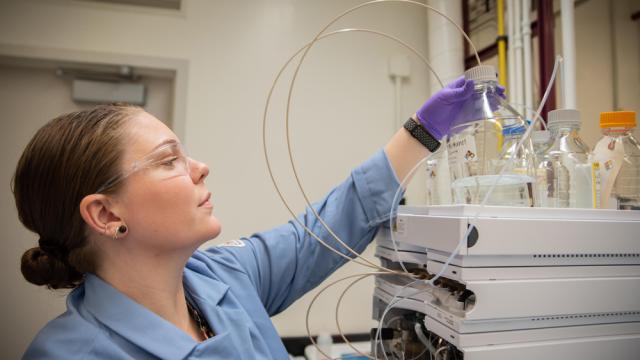
They’re called per- and polyfluoroalkyl substances, or PFAS, a group of thousands of compounds that contain a chemical bond between fluorine and carbon. That bond has proved to be one of the most stable and unbreakable known to chemistry—a fact baked into the common nickname “forever chemicals,”…

Rob Moorey
Equipment failures in healthcare can have serious consequences, including delays in diagnosis or treatment, scheduling disruptions, and patient safety risks. Health systems should empower clinical engineering teams with technology that helps identify potential failures. This will allow health…

Jessica Rector
Burnout is affecting every industry, company, and role. There are no exceptions.
Leaders often find themselves in the trenches, navigating through the chaos and driving their teams toward success. However, amidst the pursuit of goals and objectives, burnout remains a lurking enemy that can…

Etienne Nichols
In the United States, the Food and Drug Administration (FDA) is the federal agency tasked with regulating the medical device market and ensuring the safety and effectiveness of all devices for patients.
The FDA classifies medical devices by risk into three categories: Class I, Class II, and Class…

Stephanie Ojeda
An analysis of U.S. Food and Drug Administration (FDA) warning letters by the Food and Drug Law Institute reveals a perhaps not-so-surprising link between training gaps and FDA violations.
It’s one of several factors motivating companies to switch to automated training management software. The…

Aman Pandey
In the dynamic landscape of the life sciences industry, ensuring compliance with good manufacturing practices (GMP) is imperative to guarantee the safety, efficacy, and quality of pharmaceutical products.
One critical aspect of GMP is the analytical product quality review (APQR), an essential…

Morehouse Instrument Co.
In the healthcare sector, precision isn’t just a requirement. It’s a necessity where the margins for error are perilously thin, and the consequences of inaccuracy can be grave. At the heart of this precision lies the unassuming yet critical load cell, a device whose reliability is foundational to…

Dawn Bailey
The Center for Organ Recovery & Education (CORE), a 2019 Baldrige Award recipient, is a nonprofit organ procurement organization (OPO) in Pittsburgh with a federally designated service area encompassing a population of 5.5 million in western Pennsylvania, West Virginia, and one county in New…